
Geocaching 101: A First-Timer’s Experience off the Beaten Track
Geocaching was one of those things I knew of, but never really thought much about.
In my mind, it sounded like a technical version of Pokemon Go - a gadgety activity that involved stumbling blindly around public places with your eyes glued to a mobile phone.
Turns out, that’s not how it is at all.
Geocaching began in 2000, when GPS technology became accurate enough for everyday use. A man named Dave Ulmer decided to test it by hiding a container in the forests of Oregon, North America and posting its coordinates online, inviting others to see if they could find it.
Naturally, they did - and from there it took on a life of its own. Today, millions of small caches are scattered in landscapes all over the world, many in places you’d otherwise travel straight past without a second glance.
One aspect that surprised me about Geocaching is the inventiveness of it all. Some caches are straightforward enough, but others seem unhinged in the best possible way - puzzle boxes that need decoding, multi-stage hunts over large distances and finds that only reveal themselves after a long walk and a bit of stubborn persistence. It turns out geocaching isn’t just about finding things; it’s about how elaborately people enjoy hiding them.
My own introduction to the pastime came unexpectedly while planning a road trip to South Australia. I was filling my phone with hiking apps I would almost certainly forget to open, when I stumbled across the official Geocaching app. On a whim, I downloaded it - and was pleasantly surprised to see just how many 'first-timer' caches were waiting to be found in my own backyard.
My first discovery...kind of.
A few weeks later, I found myself 2.9 kilometres (1.8 miles) from home, perched on the edge of my car seat, searching for something I wasn’t entirely sure existed. The gravel road I was traveling was nondescript, tucked between lines of eucalyptus and knee-length scrub.
I climbed out of the car and set about searching, trying to look purposeful but feeling very much adrift.
For several minutes I bounced between tree trunks, scrutinised fence posts and crouched over rocks that refused, despite my poking, to be anything other than rocks. Then I saw it. Or rather, I saw what was left of it.
Beyond the fence line, scattered into the neighbouring paddock, were the remains of a plastic container. It looked as though it had met the blades of a harvester. Thousands of opaque plastic pieces littered the ground. The notebook had vanished entirely. All that remained intact was a pen.
It appeared my first geocache hadn’t been triumphantly discovered so much as totally obliterated.
I logged the failed attempt in the app and retreated to the car. As I climbed in and shut the door, my wife said: “Now that one’s destroyed… should we replace it with our own for people to find?”
Redemption at last!
It’s difficult to explain how quickly a person can become invested in tracking down storage containers hidden in the wilderness, once they've already tried and failed to find one.
I felt a strong need for redemption, and a few days later, I set out again.
This time the app pointed me toward the fruit-growing area of Pine Lodge. Armed with my camera and a slightly improved understanding of what I was meant to be looking for, I followed yet another gravel road through an entirely unremarkable stretch of countryside.
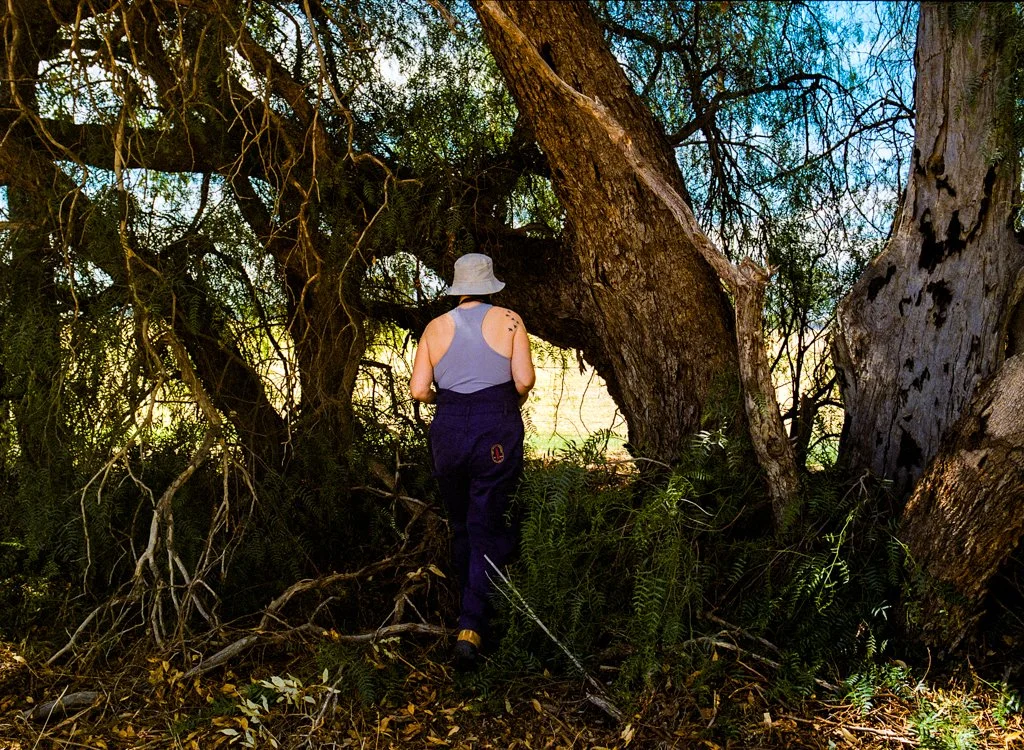
Arriving at the coordinates, my wife and I wandered around, examining tree trunks and fallen branches. Then we noticed it - a faint, well-worn trail weaving behind a cluster of trees.
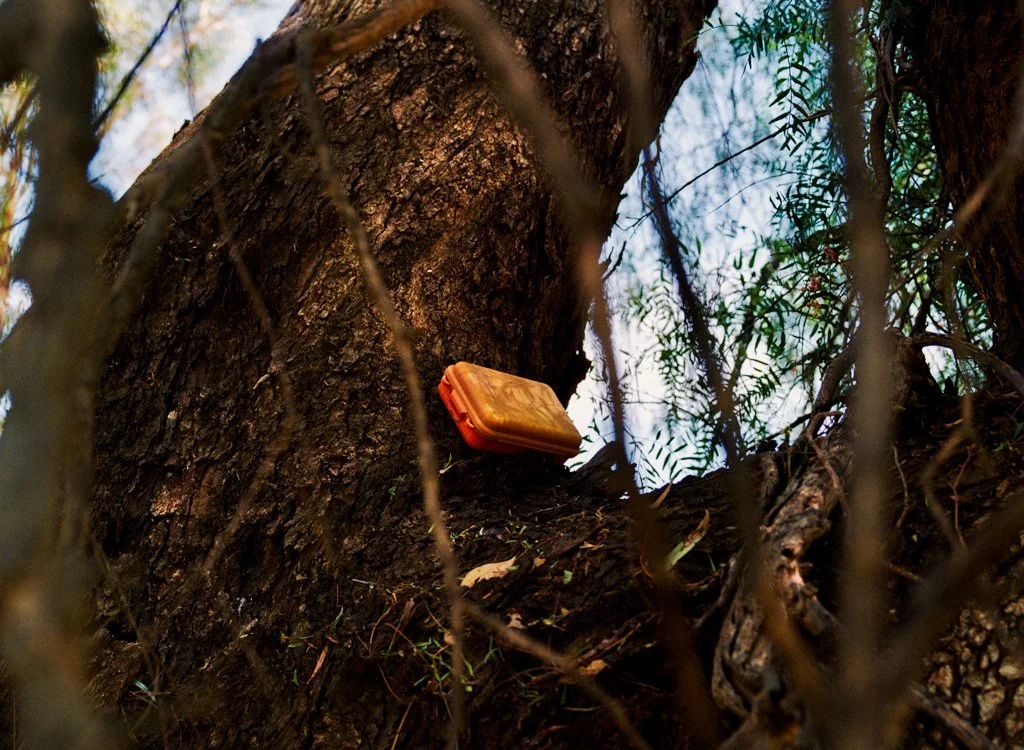
There, perched neatly on a branch, sat a small orange box. Inside the container was a small notebook. Page after page filled with the names of people who had found the cache before me. I added my name and carefully returned the box to its branch.
The sense of victory I had after logging the find in the app lasted a whole three minutes. Then I felt the strong, almost overwhelming urge to find another one.
A slightly more ambitious cache
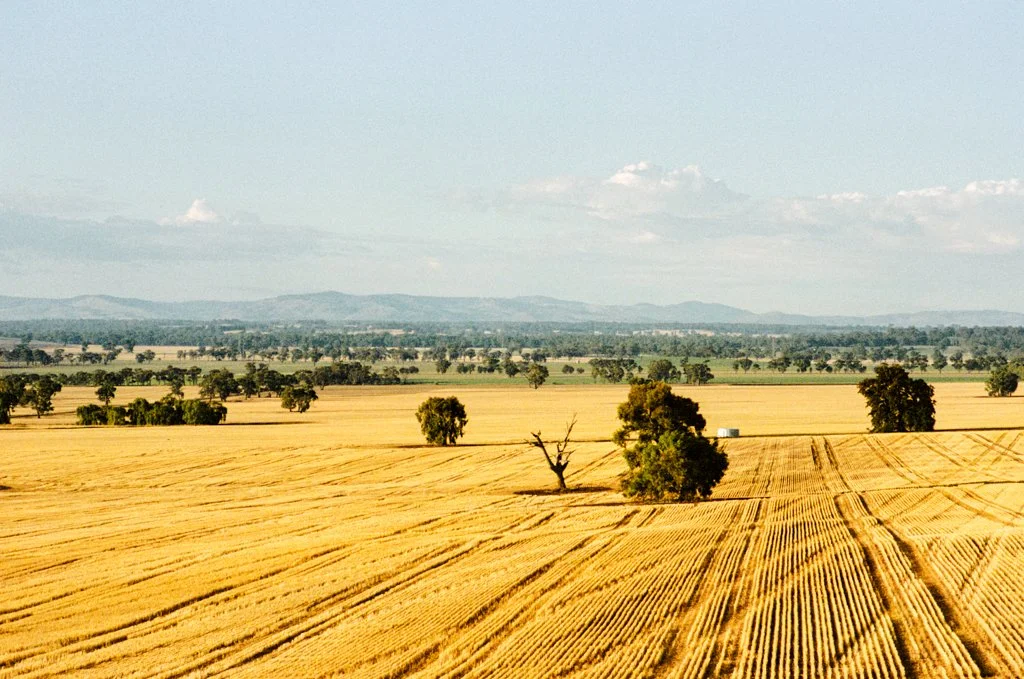
On my third time out, the app suggested a more challenging cache tucked away near Cashel Cemetery in my hometown of Dookie. Cashel sits beside a quiet rural intersection where the wind moves through dry grass and very little else happens.
After a few minutes of scanning the surrounding trees, I spotted it. Dangling from a length of wire tied to a tree trunk was a tiny silver container, suspended three to four meters above the ground.
I tried to climb the tree, which immediately revealed two things: the cache was still out of reach, and I had wildly overestimated my climbing abilities. After some creative scrambling, my wife managed to hook the keychain with the jagged edge of a long branch and gently lowered the container into my eager little hands.
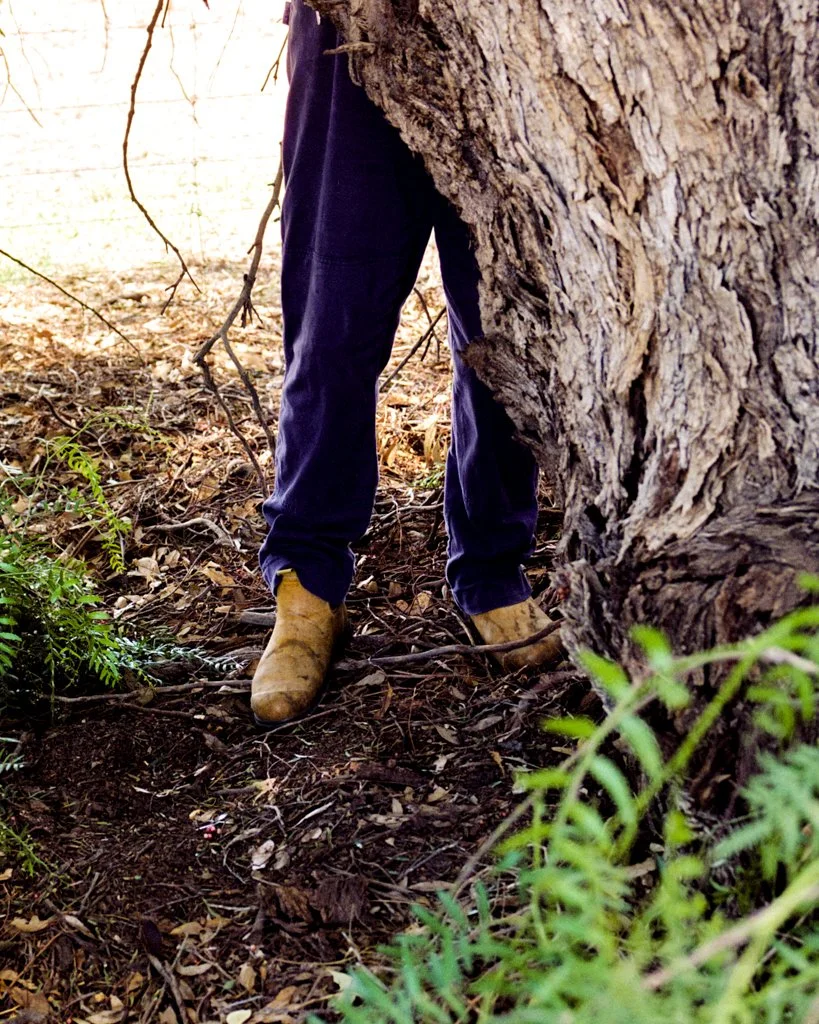
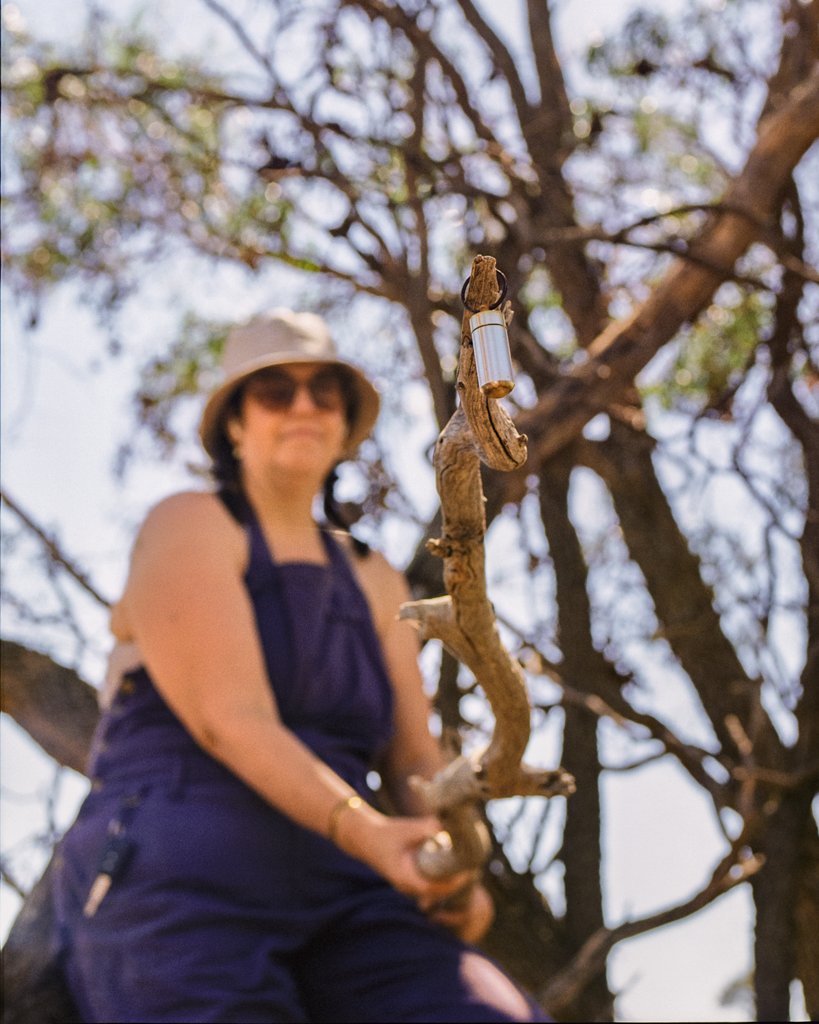
Inside was the smallest logbook imaginable — a tightly coiled strip of paper listing the names of previous finders. We signed the log, rolled it back into its tiny container and then faced the final boss: putting it back where we found it. Armed with the branch once more, I climbed the tree and maneuvered the container back into its dangling position.
When it finally swung back into place exactly where we had found it, I felt an enormous sense of satisfaction.
The strange appeal of hidden things
By this point I was beginning to understand the appeal of geocaching. At its simplest, it’s treasure hunting for adults.
But it’s also something more than that. The caches themselves are often secondary to the experiences they lead you to — quiet backroads, hidden trails, historic landmarks and places you might otherwise drive straight past.
Some caches teach you something about the landscape, a geological oddity, an overlooked piece of history, or a viewpoint that feels oddly secret despite being just metres from a public road.
Others simply surprise you with the creativity of their hiding place: containers disguised as bolts, puzzle boxes that need decoding, or elaborate contraptions that sit somewhere between engineering and mischief.
In the end, what struck me most is that it isn’t really about the objects at all. It’s about curiosity.
Since those first, fumbling attempts, I’ve found several more caches, and each one carries the same small rush of discovery.
I didn’t set out expecting to fall in love with geocaching, but somewhere along the way, I have.
Without really meaning to, I’ve started planning walks and drives around it, detouring down unfamiliar roads, wandering off well-worn paths, and following coordinates into places I would have otherwise ignored.
I acknowledge that these activities take place on the traditional Countries of the Yorta Yorta and Wergaia, who have occupied and cared for the land and waterways for many thousands of years.
I pay my respects to Yorta Yorta and Wergaia Elders past and present, recognising that sovereignty was never ceded.