
Salt Country: Exploring Murray-Sunset National Park and Lake Tyrrell
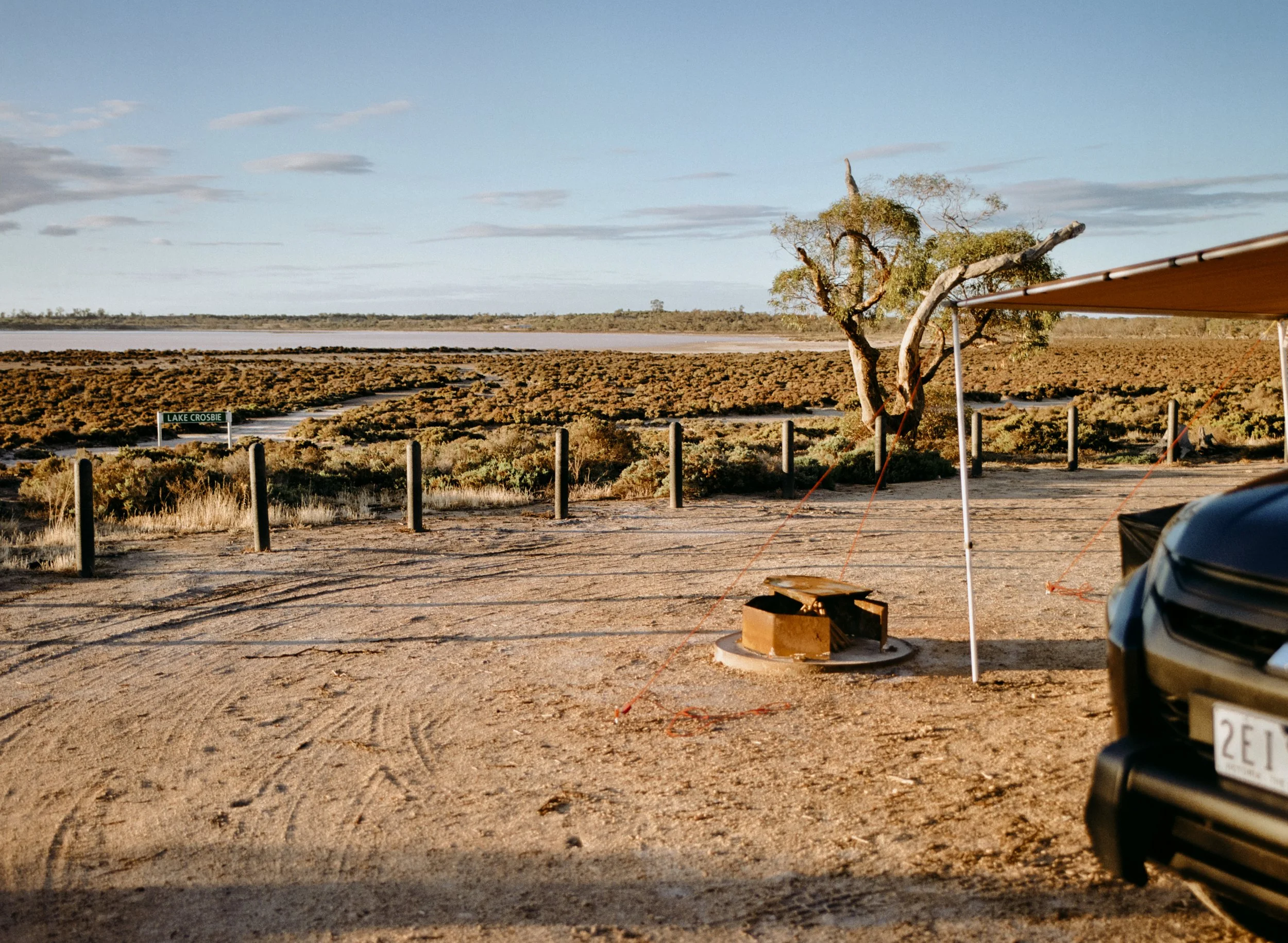
Lake Crosbie Campground, Murray Sunset National Park. Photo: Heidi Fin
There’s a special place in north-western Victoria where the road roughens, the sky stretches wide and the land begins to feel almost unfinished.
The towns grow dustier and further between and even the people seem weathered. This is salt country — an area shaped over millions of years, from an ancient inland sea to the saline flats that remain today.
At the heart of the region sit Lake Tyrrell and Murray-Sunset National Park. Also known as the Pink Lakes, their colour comes and goes — intensifying to a surreal blush during warm spells, then fading with the rain.
I’d been lucky to visit the Wimmera Mallee once before, on a dash to see the Art Silo Trail — a journey I’ll always remember fondly. What I hadn’t realised at the time was just how many, ahem — unusual attractions the region holds. Somewhere out here is the world’s smallest registered mountain, with a rise so modest it's hard to believe it even qualifies. Not to be outdone, the region is also home to Australia’s largest private collection of pinball machines.
This is a place where hard work, dusty paddocks and the eccentric coexist - where you can spend the morning staring at a scrubby horizon, then stumble across something improbably specific, lovingly kept and entirely unexpected.
For this journey, I set off with my 4WD, a loose plan, and the notion of moving at the pace the country seems to prefer: unhurried and open to whatever appeared next.
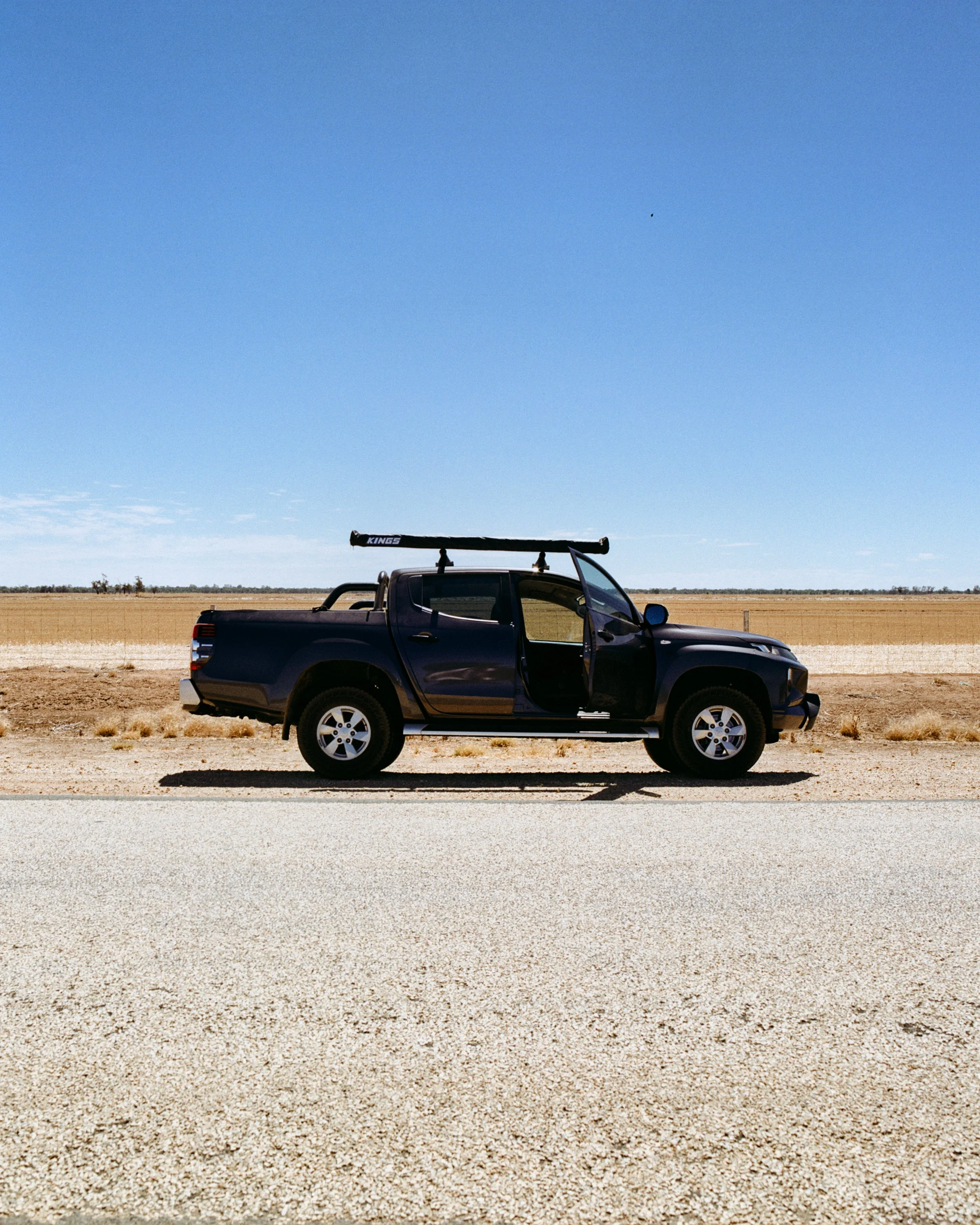
Somewhere in outback Victoria.
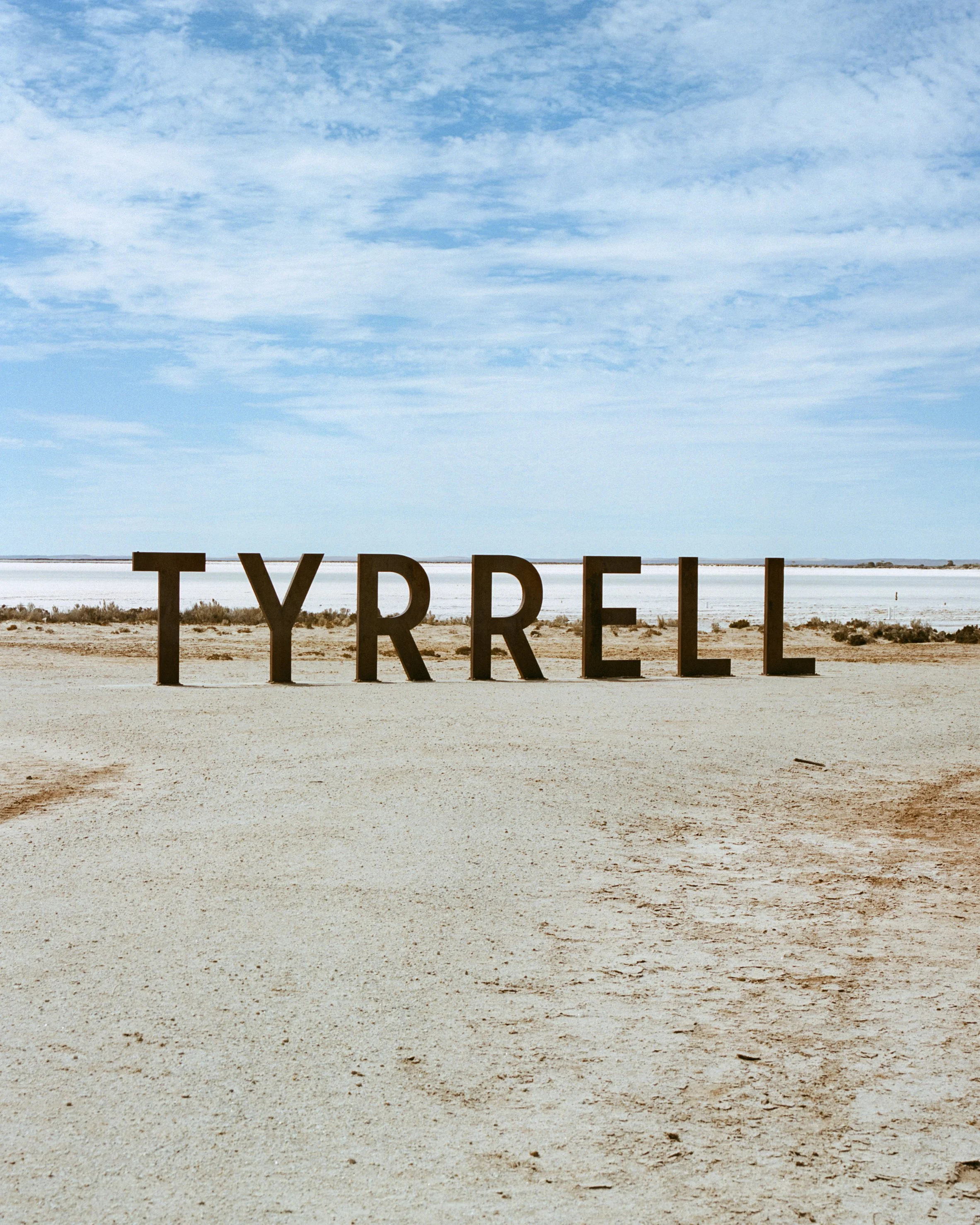
Lake Tyrell, Victoria.
Day 1: On the road
It’s four long hours before tarmac and urbanisation give way to gravel and bushland. It’s been a tiring drive from Greater Shepparton, but I’m thrilled to finally find myself somewhere I’ve always wanted to go: Lake Tyrrell.
Covering more than 20,000 hectares, the white, crusty expanse is almost too big to fathom. I can picture Bear Grylls dropped into the centre of this deeply inhospitable landscape and, within an hour, resorting to drinking his own piss.
Lake Tyrrell has been commercially harvested for salt since the early 20th century. For decades, it has been scraped, stockpiled and sent off to fish-and-chip shops across Australia. Even today, more than 100,000 tonnes are extracted each year.
On the day of my visit, it’s 40 degrees (104°F). The wind blows salt horizontally across the surface, lashing any exposed skin and wearing away my enthusiasm. There are hundreds of flies — likely thousands. To them, I am nothing but a moving picnic.
A short walk along the observation deck proves ambitious. The salt reflects an intense heat and, by the time I make the return journey, I am both damp with sweat and sunburnt.
Hours later, I make the short trip to Green Lake Regional Park and set-up camp, grateful for trees, shade and the fine tent mesh acting as a barrier between me and the outside world.
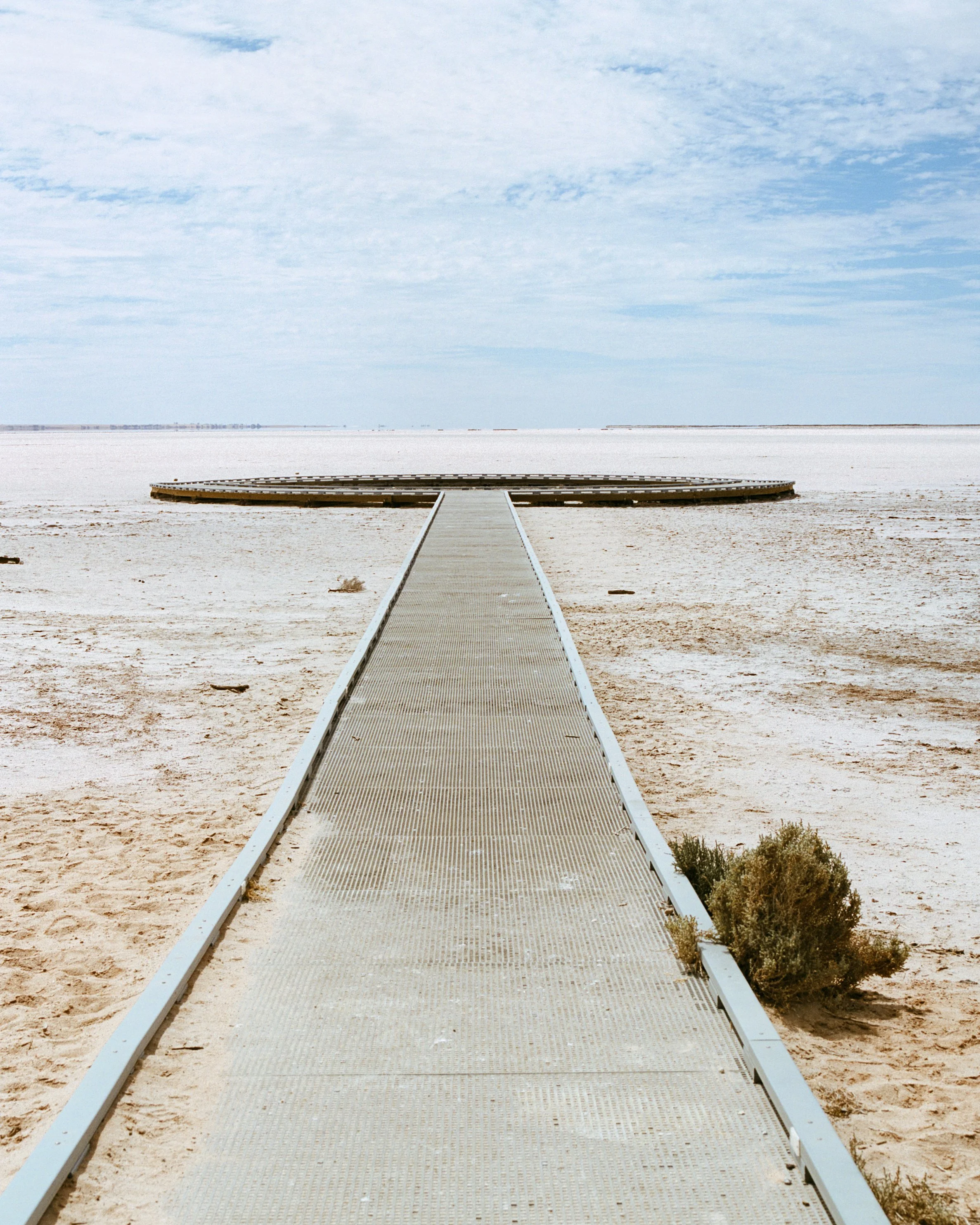
The observation deck at Lake Tyrell, Victoria.
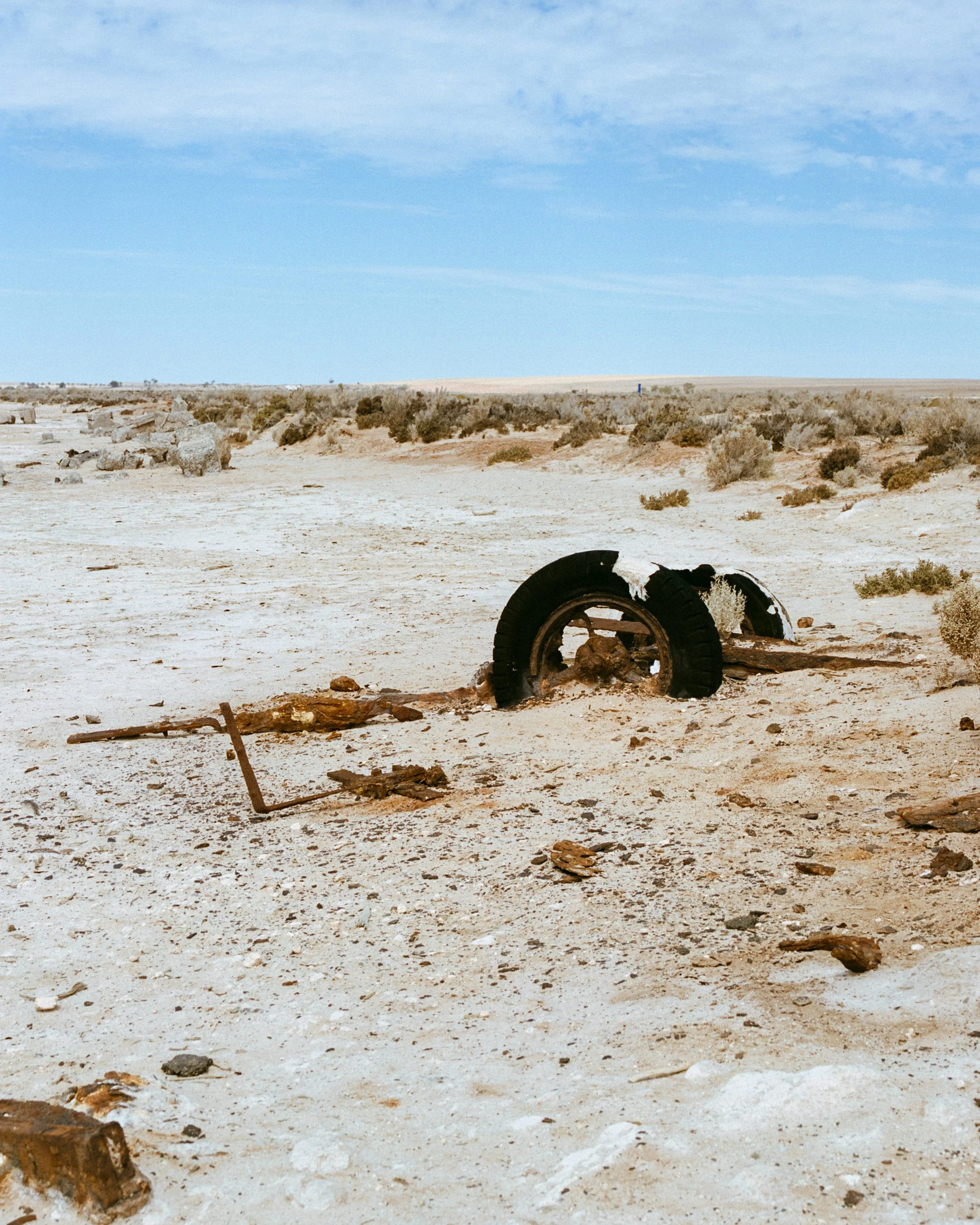
An abandoned salt mining cart.
Day 2: My cup runneth over
Before long, I’m packing up camp and back on the road. I drive through Chinkapook and Mangatang — two tiny towns tucked between vast, open paddocks. The weatherboard houses are dusty and worn. There are no front gardens to be seen, just contained squares of dirt and dust.
After 24 hours travelling in scorching weather, I’m surprised when the sky suddenly opens and a heavy downpour begins. The transformation is immediate. Kangaroos appear at the roadside, dishevelled and drinking greedily from newly formed puddles. Shingleback lizards shuffle out of the scrub. The landscape, moments earlier brittle and dry, seems to inhale.
As the rain grows heavier, I stop for coffee in Ouyen, a busy town where road trains idle while refuelling and restocking.
Later, when I arrive at Murray-Sunset National Park, Lake Crosbie is dry despite the still-falling rain. The salt is pale pink and glassy underfoot, as though it has, at some point, melted and hardened again.
I’m alone in the campground when I notice the sky has rearranged itself into something more ominous. Unsure whether to set up for the night, I trudge up a nearby hill and manage to extract a single bar of phone reception. The forecast has helpfully leapt from “possible shower” to “flash flooding”.
The idea of erecting a tent and awning — complete with long metal poles — beneath a sky that appears to be building towards a spectacular lightning storm feels unwise. I decide to continue the hike instead, reasoning that movement at least feels purposeful, even if it is only slightly less foolish.
Thankfully, by late afternoon, the rain eases. I find a spot above nearby Lake Kenyon and watch kangaroos cross the shallow water that has collected there.
That night, the rain returns with a vengeance. I fall asleep listening to droplets drum against the awning. By morning, my teacup — drained before bed — is brimming once more.
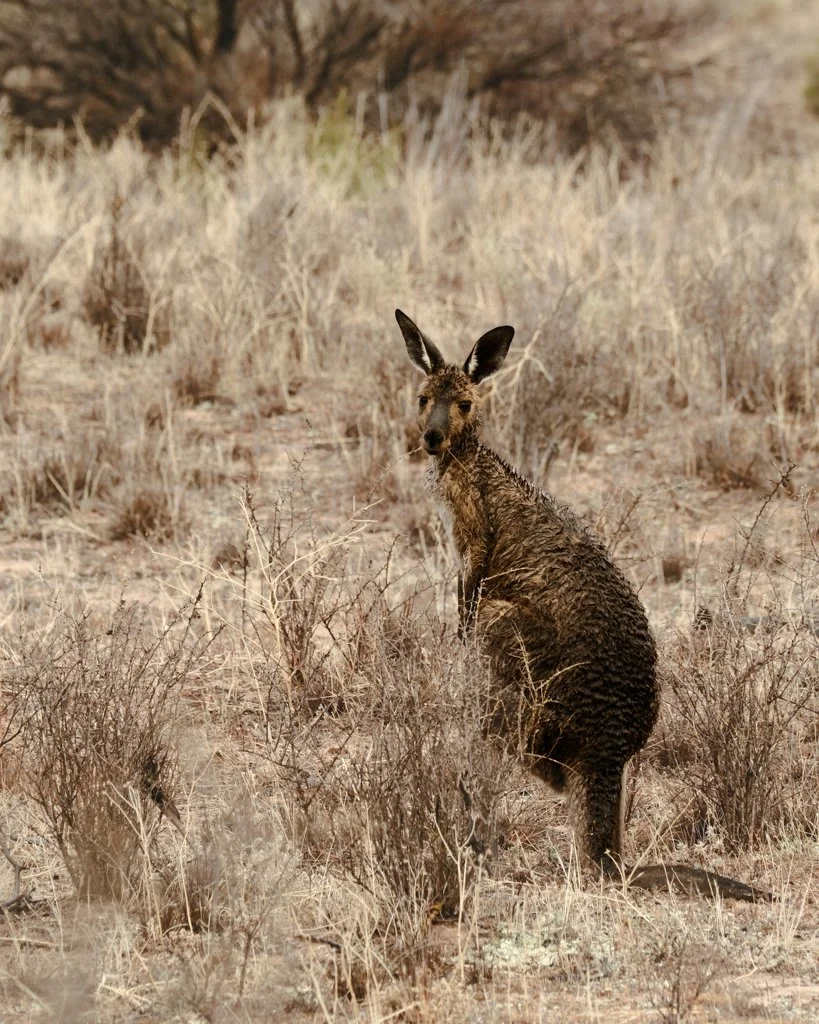
A western grey kangaroo.
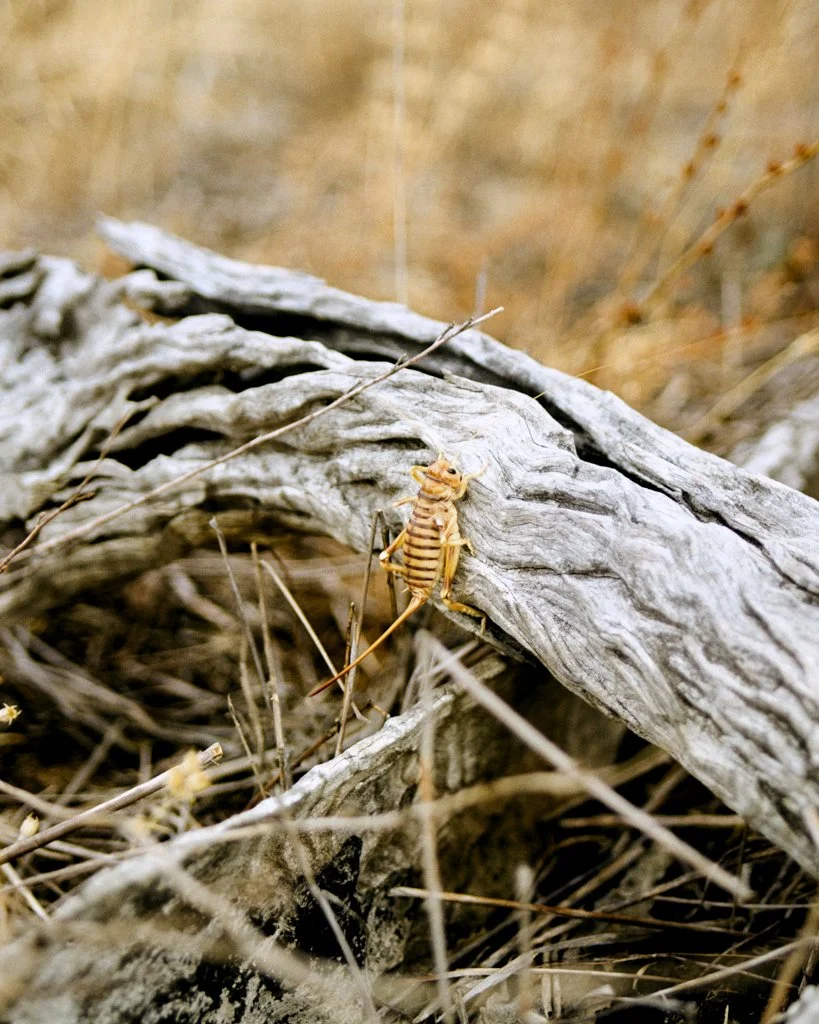
A female king cricket.
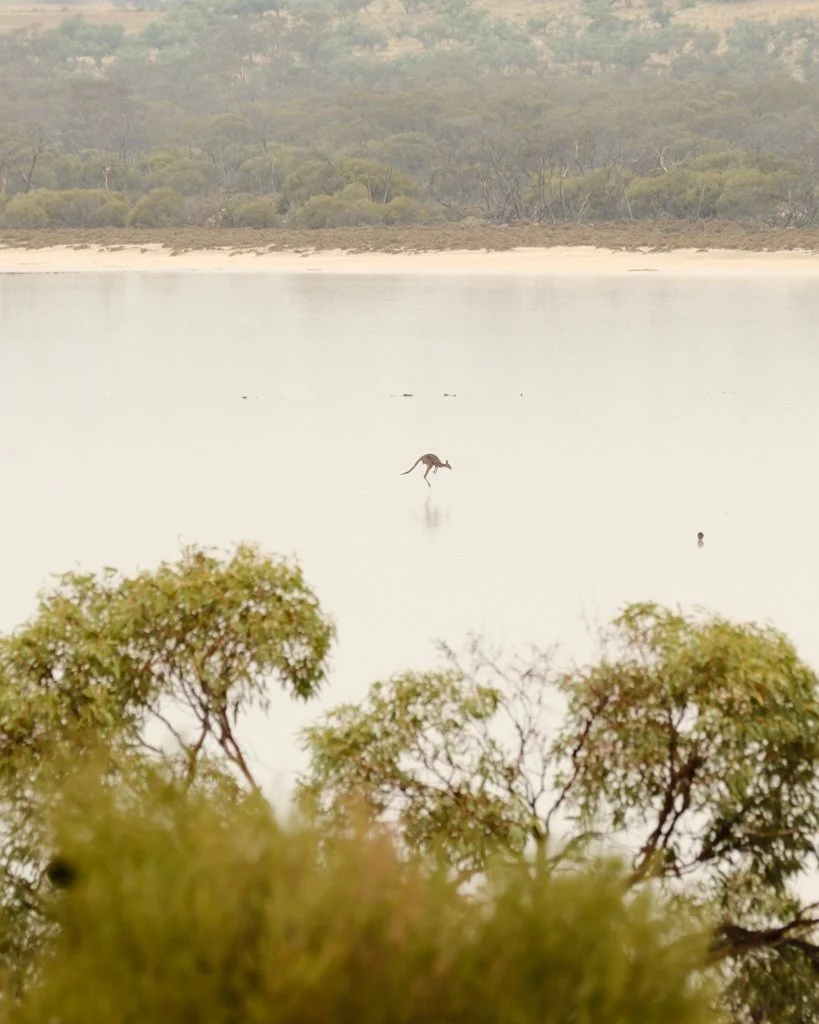
A kangaroo crosses Lake Kenyon.
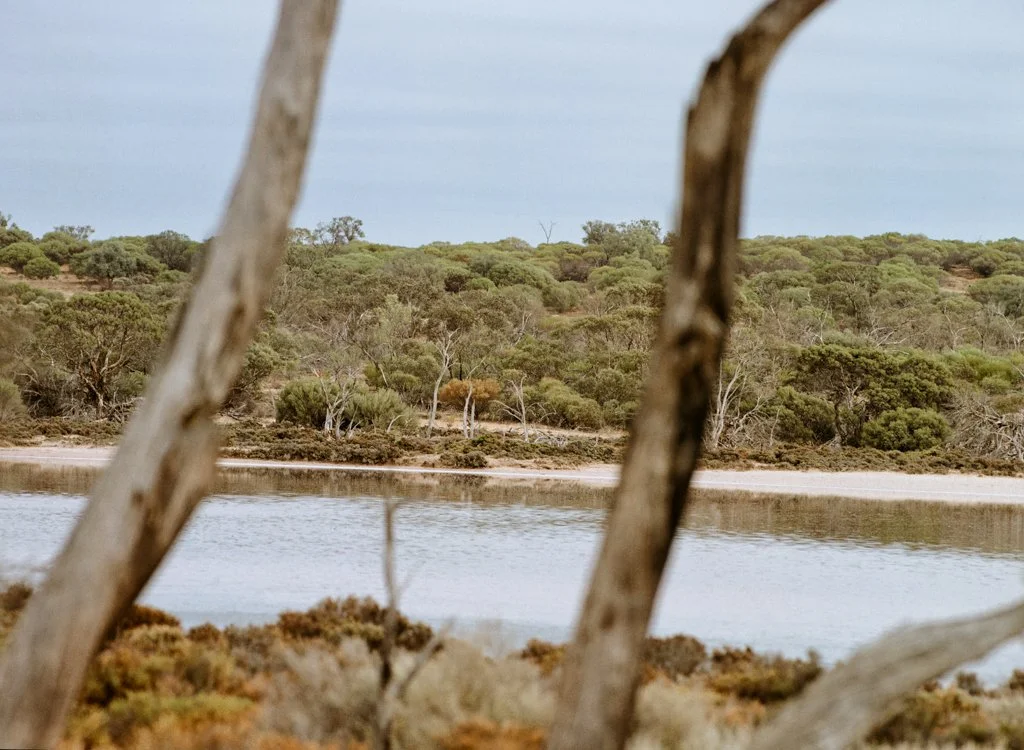
Murray Sunset National Park after the rain.
Day 3: The long walk
On the third morning, I eat a leisurely breakfast before heading out on a two-hour return hike along the salt flats.
The weather is pushing towards 40 degrees again. As I shuffle along the soft sandy tracks, hulking red kangaroos and their smaller western grey cousins regard me with curiosity and suspicion. Mallee ringneck parrots flash green and black between the trees, and regal striped skinks dart across the sand.
I pause at the edge of Lake Kenyon for some time, waiting to see if the kangaroos will stage another crossing. They don’t. It’s too hot for theatrics. Soon, I retreat to camp and surrender to the rhythm of the desert.
In a place like this, you have no choice but to submit to nature’s timetable. The morning is reserved for hiking and exploring, for stretching your legs while the air is cool and the shadows are long. By mid-afternoon, the blazing sun and wind drive everyone into hiding. There is nothing to do but rest, read and contemplate both the beauty and resilience of the landscape.
On this journey, I finish two books — To Shake the Sleeping Self and Mother, Nature, both by Jedidiah Jenkins. They resonate deeply as I undertake my first solo camp in a tent rather than a secure vehicle. As a woman especially, it’s easy to internalise other people’s anxieties about the unknown — the what-ifs, the worst-case scenarios and the raised eyebrows.
The books remind me that forging your own path often means sitting with discomfort — in this case, letting nature set the pace and discovering that I am capable of more than I believed possible.
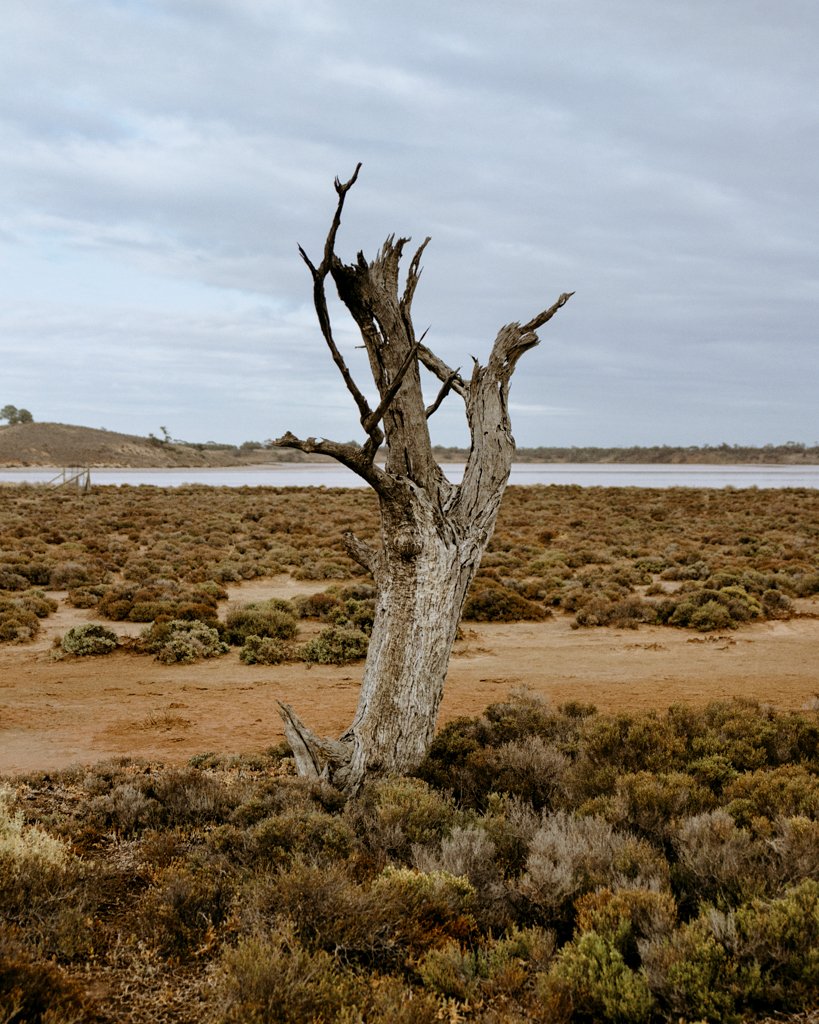
A lone tree at Murray-Sunset National Park.
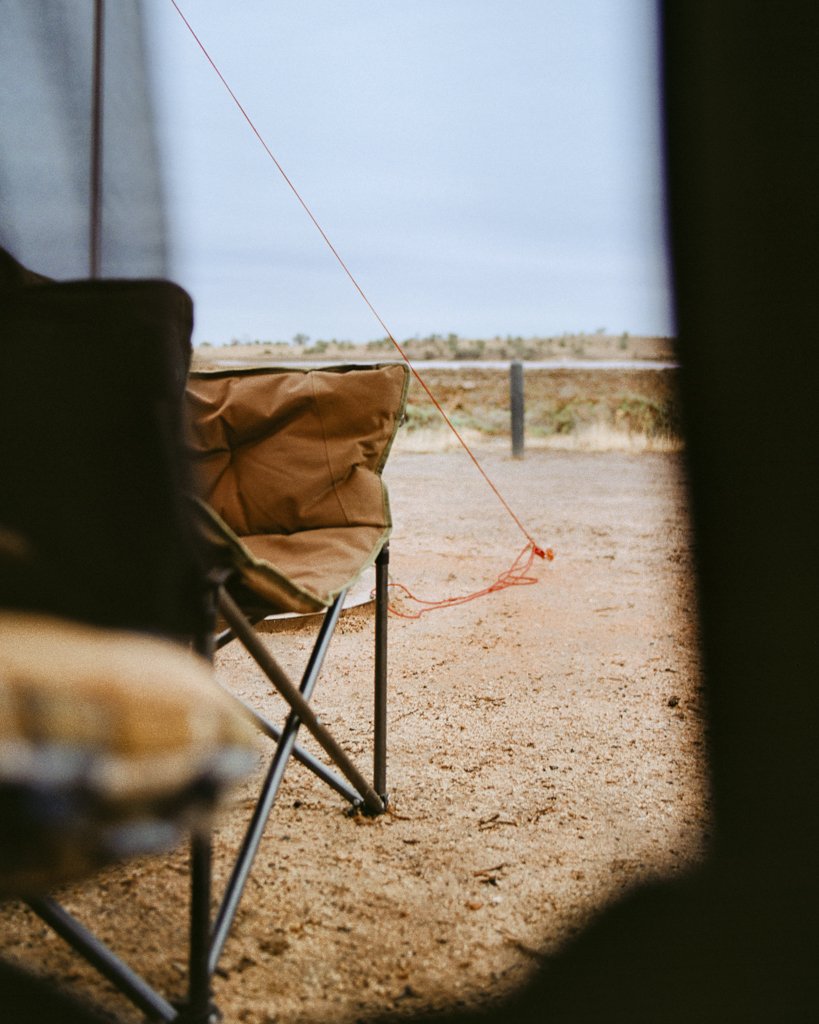
Camp.
I acknowledge that this road-trip takes place on the traditional Country of the Wergaia, who have occupied and cared for this land and its waterways for many thousands of years. I pay my respects to Wergaia Elders past and present, recognising that sovereignty was never ceded.