Over the last few years, weather events have become a much bigger interest of mine. When I lived in Greater Melbourne (which I did for most of my life), I’ll admit, it didn’t really hold my attention. The city was notorious for a repeating cycle of rain, sunshine and rain again – mostly in the space of five minutes.
The streets would turn to slush, public transport would grind to a halt and we’d all spend our evenings trying to avoid getting poked in the eye by wayward umbrellas.
Not much happened outside of that. There were none of the exceptional storm cells I’d occasionally see photographed on the NSW coast, or the flooding rains that top-end locals would describe on the news as a ‘bloody surprise’.
Once we moved to northern Victoria, however, the weather became a lot more variable. The Greater Shepparton region floods often and indiscriminately, and its intense storm cells can even produce a tornado or two.
When I learnt this, I immediately went on tornado watch and have been on it ever since. Now, come spring, RadarScope is open on my laptop almost 24/7, waiting for the next red cell and the possibility of extreme weather. Be careful what you wish for, though!
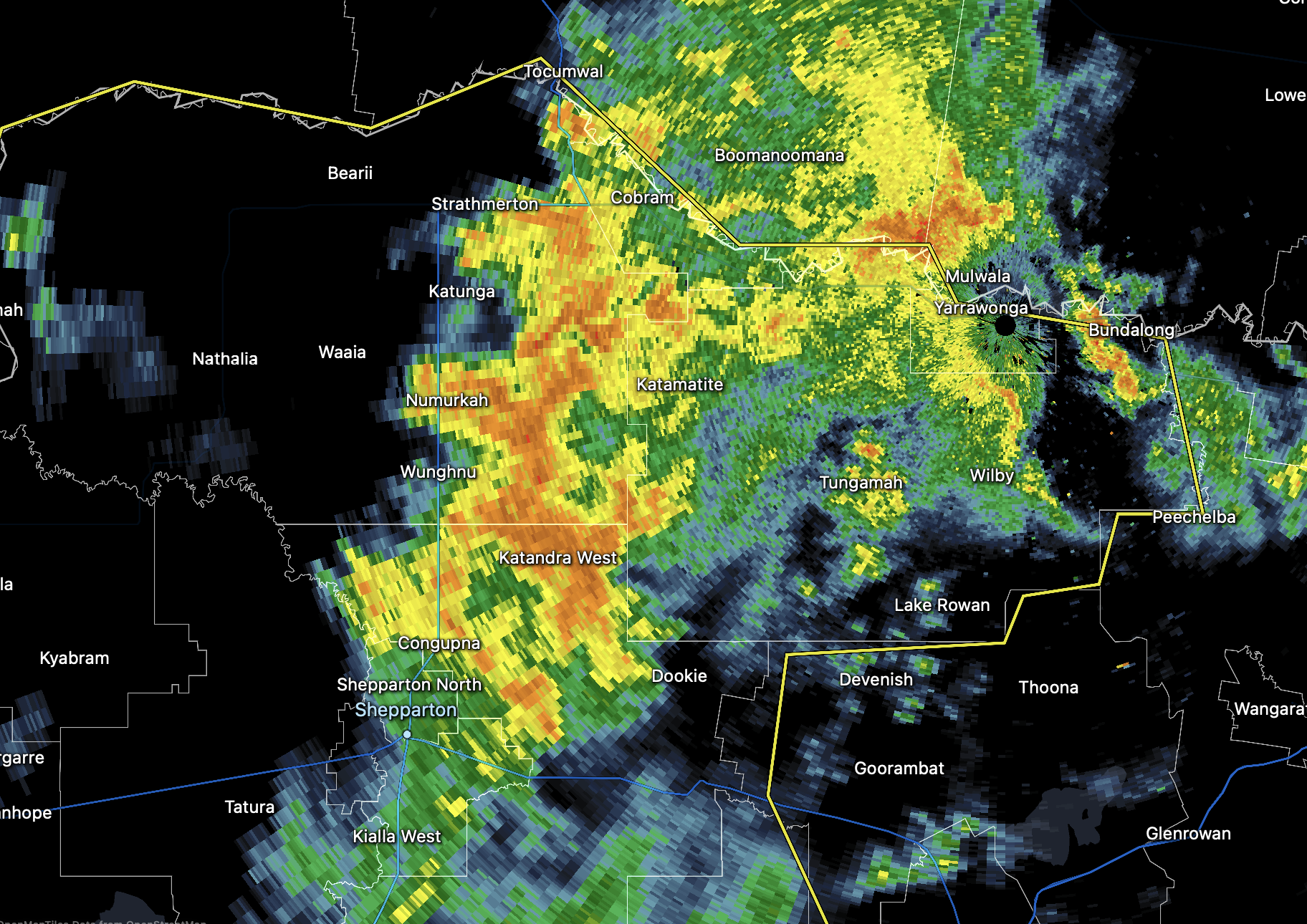
The radar image above is a snapshot from today’s storm. A power surge caused by lightning killed our power and set off all the surge protectors. I definitely didn’t have eating pizza in the dark with my cat on today’s bingo card!
Heidi, let’s be real: how many tornadoes are actually in Australia?
More than you’d think! Around 60 are reported here each year, and the real number is probably higher because plenty touch down in remote areas where nobody sees them. In comparison, the US get 1,000-plus.
How do I spot a hook echo (a potential tornado) on radar?
If you’re looking to up your weather game (or just curious), look at the radar for a storm cell with a small curl at one edge, a bit like a comma or the letter ‘J’. That hook shows rain and hail being dragged around a rotating updraft, which is the kind of setup that can produce a tornado. Seeing a hook doesn’t guarantee a tornado, though, so if you spot one near you, check the Bureau of Meteorology’s warnings and don’t rely on the radar alone.
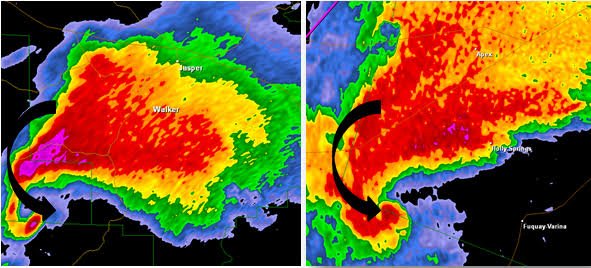
Tornadic supercell on April 27th, 2011 (image: UStornados).