Spring helpfully timed its arrival in Dookie, Victoria, to coincide with my newfound obsession with eBird and Merlin Bird ID.
I spent much of it out in the backyard, listening to birds scurry about and feed their nesting young. I also embarked on a few local birding adventures.
At home, I identified:
Superb fairywren / Malurus cyaneus
We currently have a family of wrens living in a large, established pittosporum in the backyard. I often feel grateful for this, particularly given that researchers at the Australian National University have warned that this species could become extinct within 30 to 40 years. Having them at home offers me the opportunity expand their habitat and safeguard this little family.
Common House Sparrow / Passer domesticus
These little birds were introduced to Australia around 1862 and 1863 as part of the ‘acclimatisation movement’, a deeply shortsighted plan to make Australia feel ‘more like home’ to wealthy British settlers. With no native sparrows to speak of, the Eurasian Tree Sparrow and Common House Sparrow quickly spread, pushing out native birds and becoming a pest.
White-plumed honeyeater / Lichenostomus penicillatus
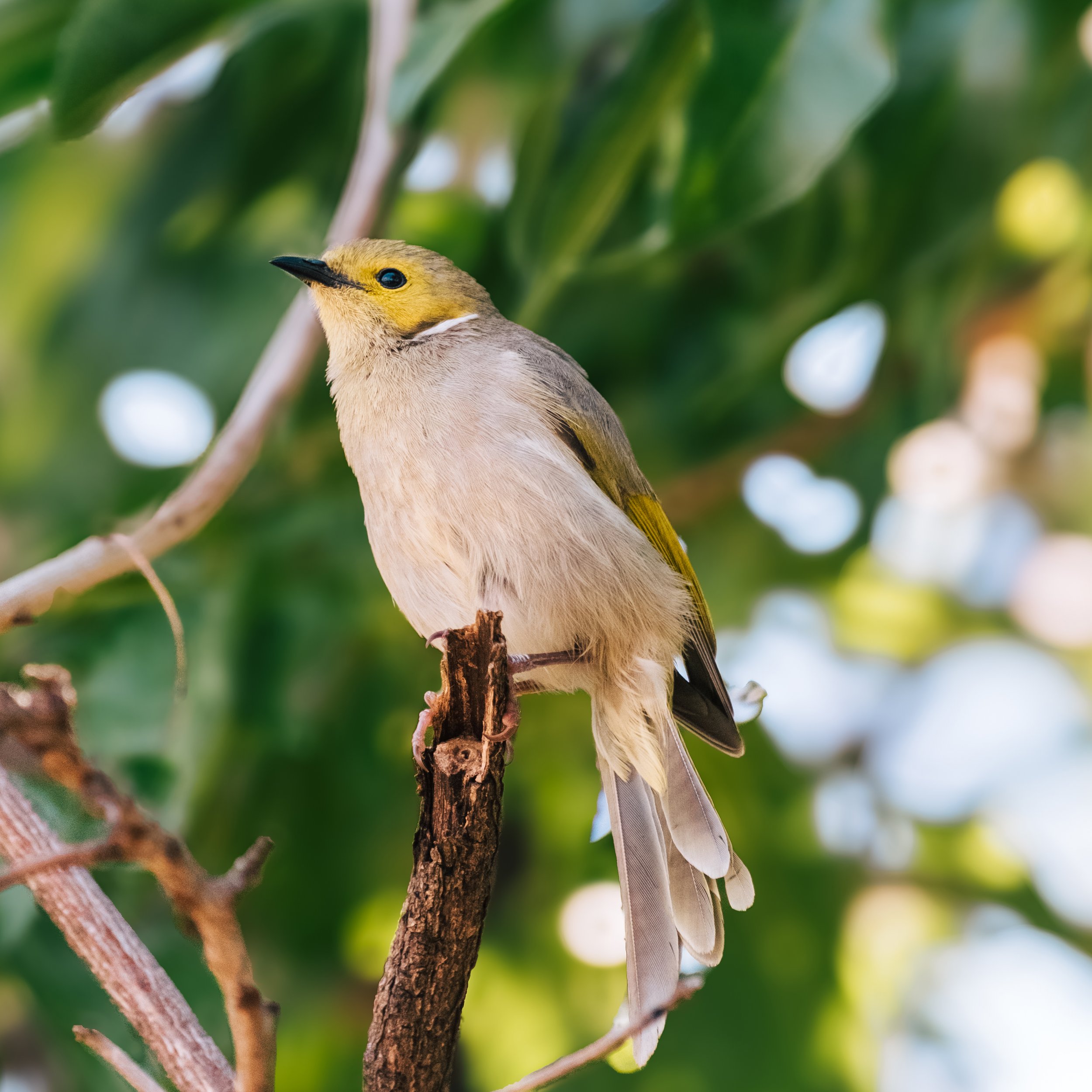
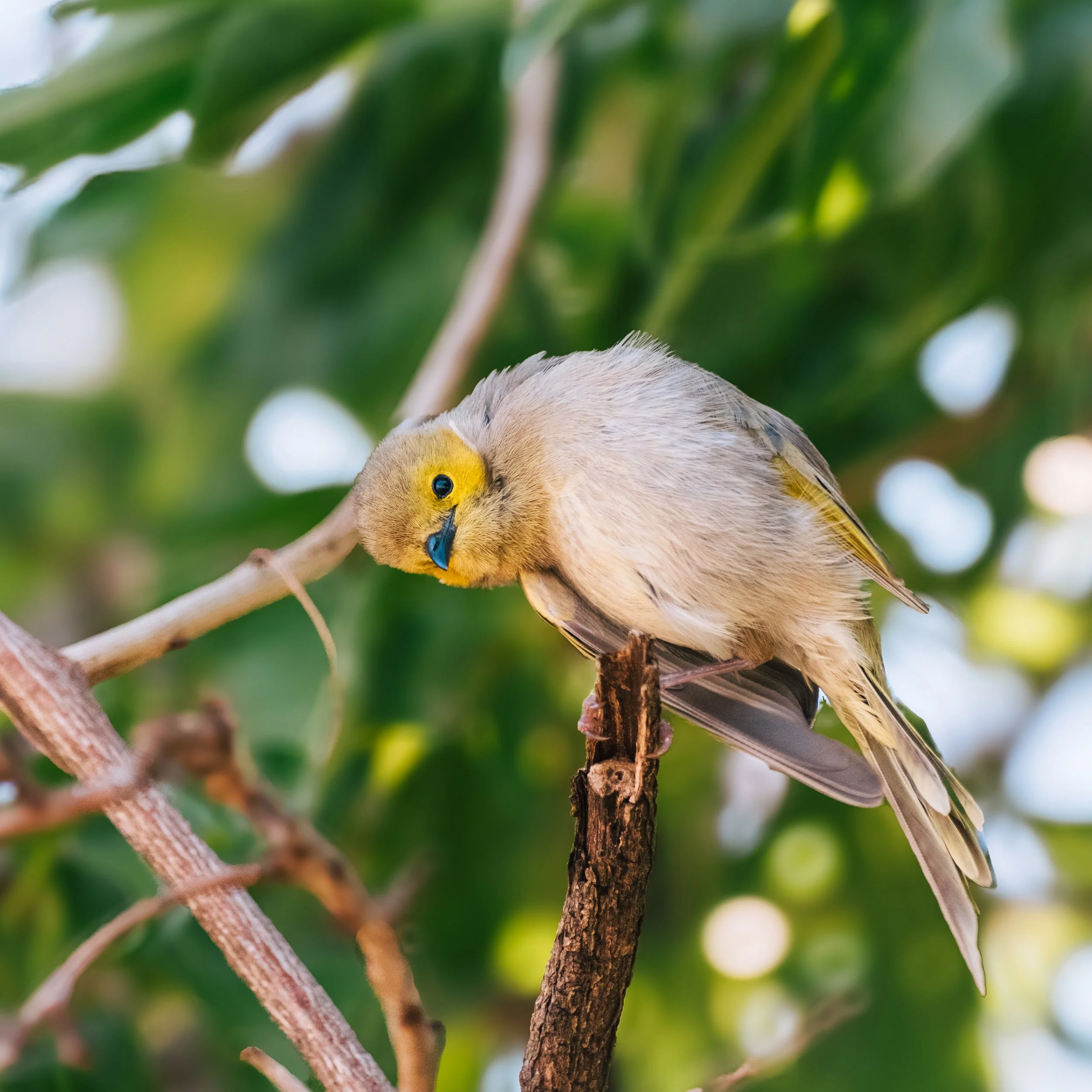
These tiny honey-eaters are thriving in our backyard, with groups of five to six often spotted at one time. They’re particularly responsive to hearing their beautiful bird song, played through the Merlin ID app. I’ve found it challenging to take photos of them as they don’t sit still and zip through trees and branches exceptionally quickly.
Galah / Eolophus roseicapilla
A common one in Victoria. These playful visitors never land on our property and instead fly over on their way to the nearby wheat fields. You can often spot them on boundary fences or amongst the wheat, picking it clean in large groups.
Common blackbird / Turdus merula
Another product of the ‘acclimatisation movement’, there are a number of common blackbirds in our garden, with at least two active nests that I know of. Their bird song is beautiful, and they are doing a great job keeping on top of the caterpillars chomping their way through our native garden.
Red wattlebird / Anthochaera carunculata
These birds are the unintentional comedians of the bird-world, I feel. Highly territorial, the wattlebirds spend their waking hours chasing all others away from the flowering plants in our garden. It’s a never-ending job, with most birds returning the second the wattlebird is out of sight.
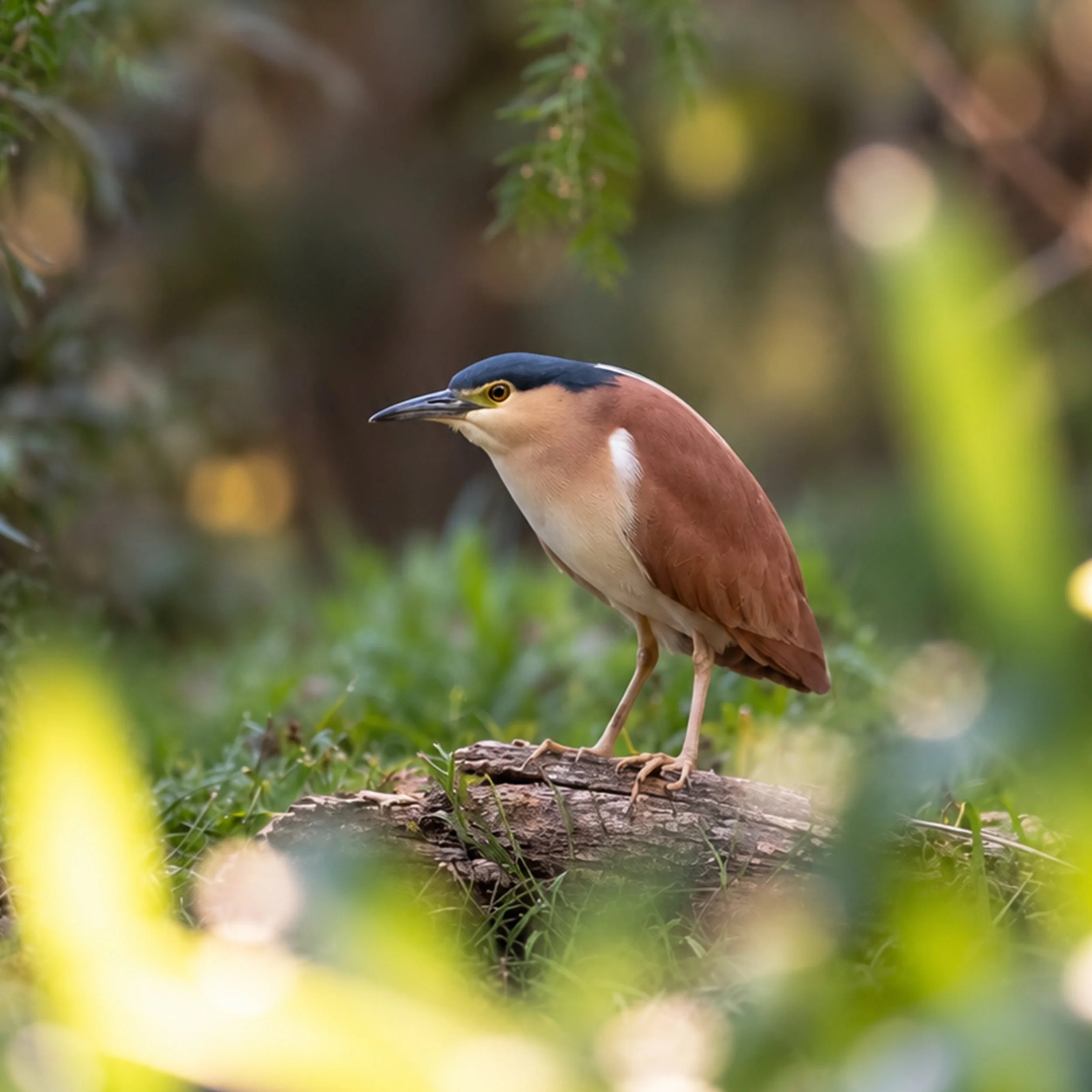
Nankeen night heron / Nycticorax caledonicus
The arrival of the nankeen night heron my backyard coincided with the day all the tadpoles in our pond vanished without a trace. Coincidence? I think not. Since clearing us out, it hasn’t made a return visit.
Australian king parrot / Alisterus scapularis
Our beloved family of king parrots returned to the backyard this month after their extended winter break. Over the months ahead, they’ll likely be found grazing the almond tree or picking tomatoes from the vegetable garden. I predict they’ll have quite the challenge ahead - our two established apple trees have hundreds of fruits forming and there’s only so many apples us humans can eat.
Common bronzewing / Phaps chalcoptera
This might be a common native pigeon, but I’d never seen one until I moved from Melbourne to Greater Shepparton. Now a few of them visit the property reguarly with their beautifully coloured wings.
Grey shrikethrush / Colluricincla harmonica
This bird remains one of my favourites. What it lacks in fancy plumage, it makes up for with it’s incredible singing ability. It reguarly serenades me through my office window, while eating the house spiders that live in the window edgings.
Around home (within 5kms), I identified:
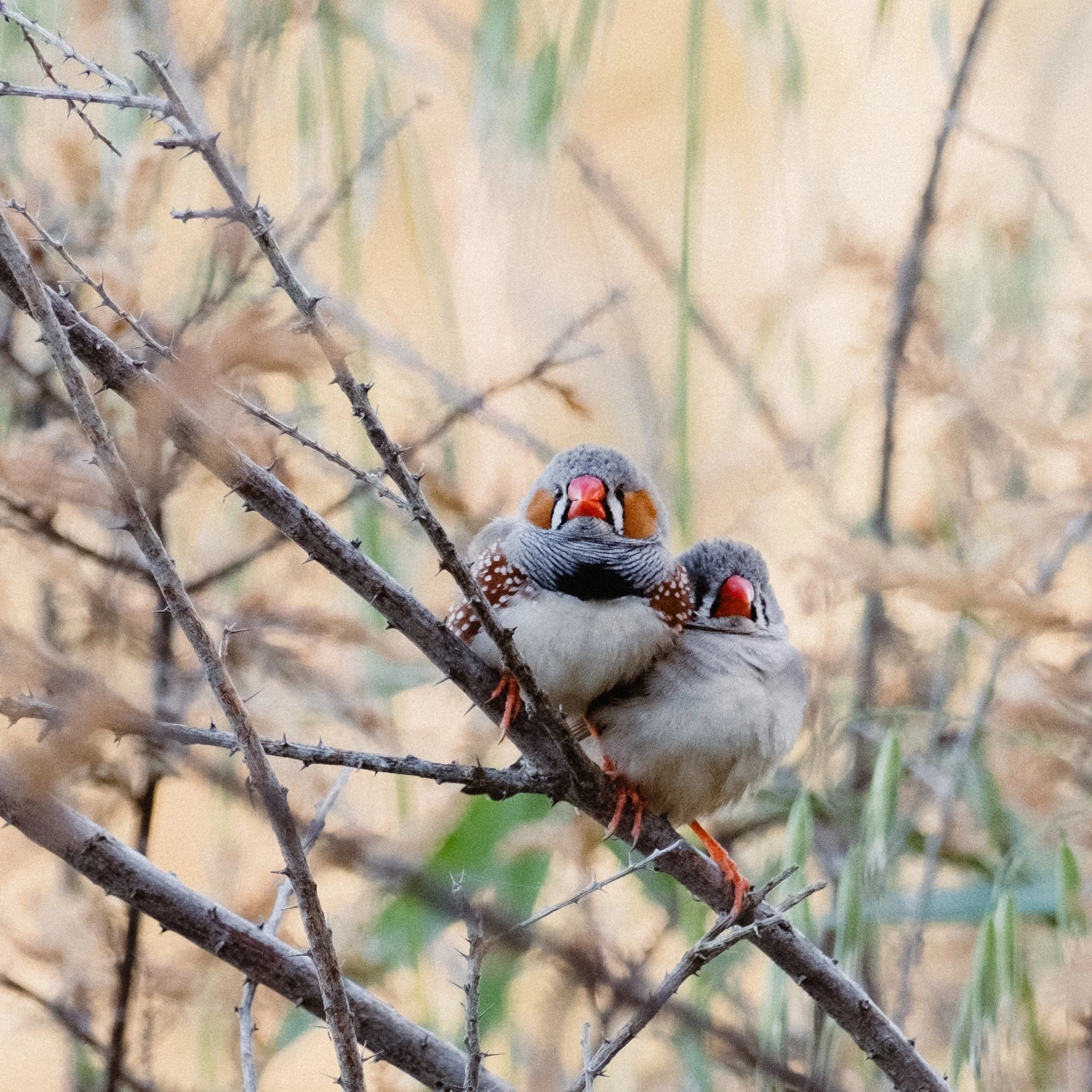
Zebra finch / Taeniopygia
These little birds are found mostly in drier areas. They form huge family groups, up to 100 or more birds. The day I spotted these two, cuddled up on a branch near Mount Major in Dookie, there were no others in view. Saying that, the bushes they were residing in were quite dense, so it’s likely more were nearby.
Laughing kookaburra / Dacelo novaeguineae
One of my favourites, even if they are common across Australia! A small group of kookaburras live in the bush adjacent to the abandoned railway line, laughing at anyone that walks by.